

Trial and error have been the modus operandi for Steve Richardson since the onset.
The Brighton, Mich. native drifted away from the sport after his own athletic career concluded, but he found himself roped back in once his five-year-old son was introduced to wrestling.
“I grew up wrestling, wrestled through high school, and was somewhat successful, so I wanted to stay in the sport,” Richardson explained. “I wanted to get my son into it, and we lived not too far from the Matcats, my old club.”
“We went to the first practice and there were only 12 kids in a very small room. Another dad and I were in a similar situation. We decided to work through the operations of youth parents, and by the end of the season, we formalized it. I became head coach, and we’ve been going ever since.
Now, 17 years later, the Matcats of South Lyon, Mich. have grown from 12 pupils to 230, which includes boys and girls. They even expanded the club’s name from the South Lyon Matcats to the Michigan Matcats because of the influx of members spanning a broader geographic region.
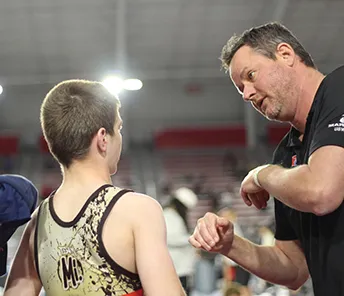
Steve Richardson
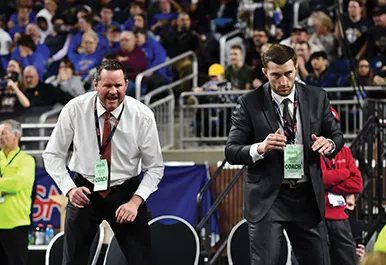
Steve Richardson
The first few seasons, Richardson admits, consisted of him and a few other dads “just figuring it out.” Learning the paperwork, navigating parents, deciding which tournaments to attend, etc. were just some of the early challenges.
As the numbers grew, so did the level of expertise among Richardson and his staff.
Today, the well-oiled machine that is the Michigan Matcats, now the largest club in the Great Lakes State and one of the five largest in the nation within USA Wrestling’s umbrella, has also produced more high school state qualifiers within the Michigan High School Athletic Association (MHSAA) than any other club over the last four years. Nearly a dozen athletes competing at the collegiate level came up through Richardson’s tutelage.
The club’s motto of “Win with pride, lose with dignity, learn from both,” Richardson insists, is the guiding principle by which all decisions and operations are carried out.
“That has been our quote from day one, and it will never change. It is printed on our website, our t-shirts, etc. Win with pride, lose with dignity, learn from both. If you follow that, it is going to carry you a long way.”
“Every time you step on the mat, it is an opportunity to learn about yourself. Somebody is going to win, and somebody is going to lose. If you steal a couple you’re not supposed to win along the way, you’re going to be in great shape.”
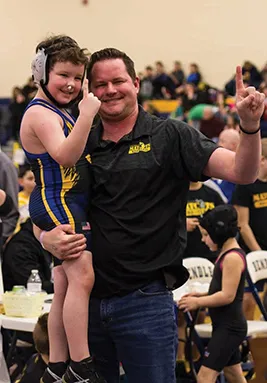
Steve Richardson
Richardson, a self-proclaimed freestyle and Greco enthusiast, believes that no matter what style kids are wrestling, and he finds creative ways to incorporate all three, the most imperative concept is to focus on having fun.
“The most important thing is to just make it fun,” Richardson said. “If the kids are having fun, the parents will buy in. When they are five, six or seven years old, it is not about winning right now. If they are having fun, winning is just a byproduct.
“It is about fundamentals and doing it in a fun way. My goal is just to make them come to tomorrow’s practice.”
“Sometimes kids don’t like new and change, so I don’t use the phrases ‘folkstyle, freestyle or Greco.’ I’ll just say, ‘we are doing upper body today.’ Or I will say, ‘try to turn the guy and you are allowed to lock your hands.’ Before they know it, they are already wrestling freestyle and Greco without realizing it.”
Head coach of Michigan’s Junior National Team and also now a varsity assistant coach at Brighton High School, Richardson wears several hats in the coaching realm.
His advice for fellow coaches, whether seasoned veterans or those just setting out on a quest to impact young lives just like he did nearly 20 years ago, is aplenty. Above all else, communication is one topic he discussed at length.
“I always am up front with the youth parents and have a meeting before the season,” Richardson explained. “The high school level is a different animal. A lot of times, the parents don’t care about culture. They just care about winning.
“Yes, winning is important, but our job is to make sure that they are good men or women and get them prepared for college. We shut off a lot of communications with parents at the high school level. Communicate to the athletes like adults. One day a week we can sit down and discuss with parents.”
Richardson also emphasized the importance of asking questions and seeking to evolve as a coach in the same way he expects his student-athletes to develop.
“I would not be the coach I am or have the club I do if it wasn’t for all the coaches we’ve worked with, asked for help, or stolen their methods or vernacular.
“I do everything I can to learn from every event we go to. I’ve never been the ‘my way or the highway guy.’ We can always grow. Be humble and always keep your ears open.”

Tristan Warner is a former PIAA finalist and three-time NCAA qualifier for Old Dominion. The two-time Elite 89 Award recipient and CoSIDA Capital One Academic All-American lives in Shippensburg, Pa.
Related Articles
2021 Olympic Trials will not take place at Penn State
2021 Olympic Trials will not take place at Penn State
8 Feb 2021
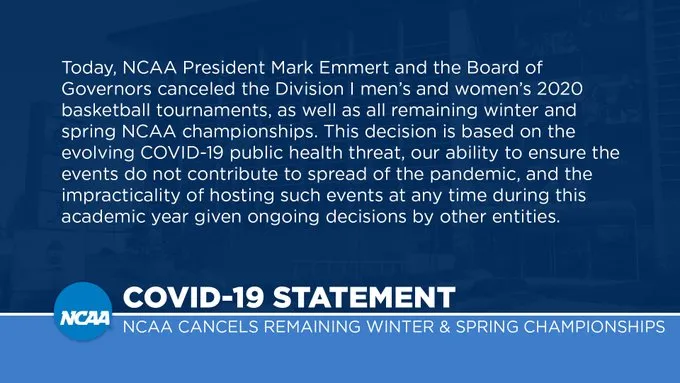
NCAA Championships Cancelled
NCAA Championships Cancelled
12 Mar 2020
30th Annual WIN Show to be held during NCAAs in Minneapolis
30th Annual WIN Show to be held during NCAAs in Minneapolis
9 Mar 2020

WIN’s 2020 Championships Postseason Coverage
WIN’s 2020 Championships Postseason Coverage
9 Mar 2020
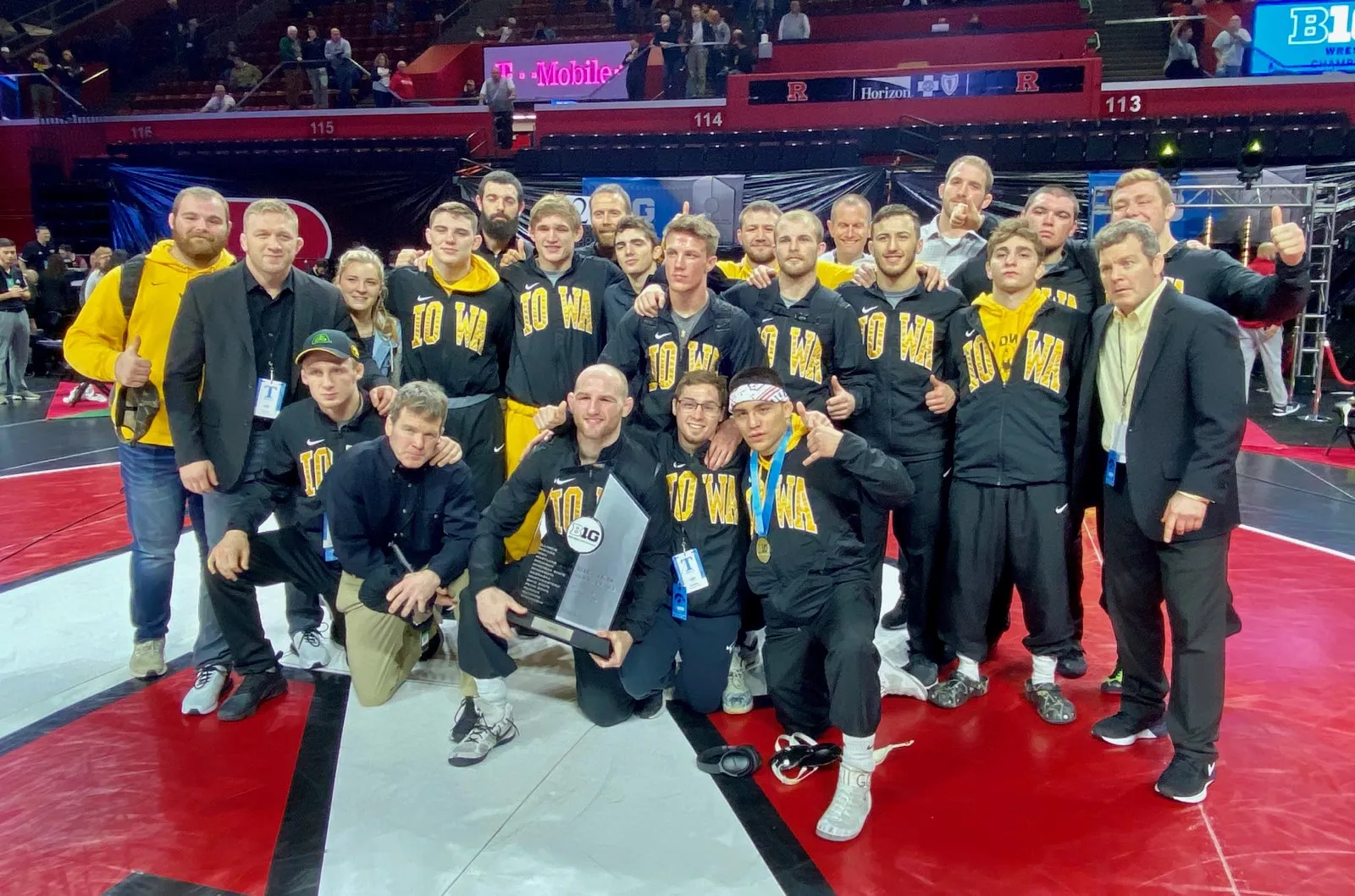
Iowa crowns three champs, earns 36th all-time Big Ten title
Iowa crowns three champs, earns 36th all-time Big Ten title
8 Mar 2020
-
2021 Olympic Trials will not take place at Penn State
2021 Olympic Trials will not take place at Penn State
8 Feb 2021
-
NCAA Championships Cancelled
NCAA Championships Cancelled
12 Mar 2020
-
30th Annual WIN Show to be held during NCAAs in Minneapolis
30th Annual WIN Show to be held during NCAAs in Minneapolis
9 Mar 2020